
Most guides list the same generic documents title deed, NOC, mutation without mentioning the one thing that actually changes your answer: what kind of plot you’re buying. A friend of mine spent four months chasing a “sale deed” for a plot that was still just a file a booking, not a registered property because nobody told him that document didn’t exist yet at that stage. This guide sorts things by purchase type and deal stage, so you know exactly which documents do you actually need to buy a plot or apply to your situation, not a generic list.
1. Why “It Depends” Is the Real Answer
Here’s the thing nobody says out loud: a plot that’s still a “file” being sold by a developer, a plot you’re buying resale from an individual, and a plot carved out of agricultural land are three completely different legal situations. They don’t share the same paperwork trail.
There are four common ways people end up buying a plot in Pakistan:
- A file an unregistered, often undeveloped plot booked directly from a developer
- A possession plot allotted and physically handed over by a housing society
- A resale plot bought from an individual who already owns it
- Agricultural land converted for residential use usually on the edge of a city, sold with revenue-department paperwork instead of society paperwork
Provinces do handle registration slightly differently Punjab, Sindh, KP, and Balochistan each have their own systems and fee structures but the document types you need stay basically the same across the country. What changes far more is which of the four categories above you’re in. Let’s break each one down.
2. Identify Which Type of Plot You’re Buying
Buying a File (Unregistered/Undeveloped Plot) from a Developer
A “file” is basically a reservation. You’ve paid for a plot number in a scheme, but the land underneath it might still be under development; sometimes it isn’t even fully acquired by the developer yet. There’s no registry involved because there’s technically nothing registered yet.
What you should actually be holding:
- Booking form / application form, signed and stamped
- Payment receipts for every installment (keep every single one not just the final total)
- Allotment letter from the developer
- A copy of the developer’s NOC from the relevant development authority
This is, honestly, the riskiest category. If the developer’s NOC verification is fake, delayed, or the land is still tied up in a legal dispute, your “file” can become worthless paper. Files change hands multiple times before a single brick is laid, and every resale of a file adds another point where fraud can slip in.
Buying a Possession Plot in a Housing Society
This is a step further along as society has developed the block, and you’re either buying directly from the developer at possession stage or from someone who already holds possession.
documents needed to buy a plot in Pakistan:
- Allotment letter
- Possession letter (this is the key difference from a file it confirms the land is physically ready and handed over)
- Society NOC
- Membership certificate, if the society requires membership
- No-dues certificate from the society, confirming no unpaid installments or charges
If you’re buying from someone who already has possession, you’ll also need a No-Demand Certificate (NDC) more on that shortly before the society will process the transfer into your name.
Buying Resale from an Individual Owner
This is where people expect a title deed to exist and this is the only category where you should actually expect one. When you buy from an individual owner who already registered the property in their name, you need to trace the full ownership chain, not just look at the most recent piece of paper.
- Registered Sale Deed / Registry in the seller’s name
- Fard-e-Malkiat (Record of Rights) confirms the seller currently holds rights over the plot
- Mutation (Inteqal) record showing the property was correctly transferred to the seller
- No-Demand Certificate (NDC) from the housing authority, if applicable
- Seller’s original CNIC, matched against the name on every document above
This is the most document-heavy path, and for good reason you’re not just checking that the seller owns the plot today, you’re checking that every owner before them transferred it legally too. A broken link anywhere in that chain is a problem you inherit.
Buying Agricultural Land Converted for Residential Use
This one catches people off guard because it doesn’t run through a housing society at all it runs through the revenue department.
- Khasra and Khatooni records (the traditional land revenue documents identifying the specific parcel and its ownership history)
- Change-of-Land-Use (CLU) certificate confirms the land has actually been legally converted from agricultural to residential use
- Revenue department clearance
Here’s the mistake people make constantly: they buy land near a growing city assuming it’s “basically residential now” because there are a few houses nearby, without ever checking whether the CLU certificate exists. Without it, you can end up owning land you legally can’t build a house on at least not without a fight with the local development authority later.
Quick self-check which one are you?
- Is there a housing society or developer involved, or are you buying straight from a private individual?
- Has the land been physically handed over (possession), or are you just holding a booking?
- Was the land always residential, or was it farmland recently converted?
Answer those three questions and you’ll know which section above actually applies to you.
3. The Complete Document Checklist (By Purchase Type)
Here’s the same information side by side, so you (or your agent) can use it as a quick reference.
| Document | File / Booking | Possession Plot | Resale Plot | Agri-Converted Land |
| Booking form / payment receipts | Required | Required | — | — |
| Allotment letter | Required | Required | Part of ownership chain | — |
| Possession letter | — | Required | Required | Required |
| Society / Developer NOC | Required | Required | Required | N/A |
| Sale Deed / Registry | — | — | Required | Required |
| Fard-e-Malkiat | — | — | Required | Required |
| Mutation (Inteqal) | — | Post-transfer step | Required | Required |
| No-Demand Certificate (NDC) | — | Required | Required | — |
| Khasra / Khatooni record | — | — | — | Required |
| Land-use conversion (CLU) certificate | — | — | — | Required |
| Seller’s CNIC + ownership chain | — | — | Required | Required |
Bookmark this table. It’s the fastest way to answer “wait, do I actually need this document?” in the middle of a deal.
4. Documents by Transaction Stage
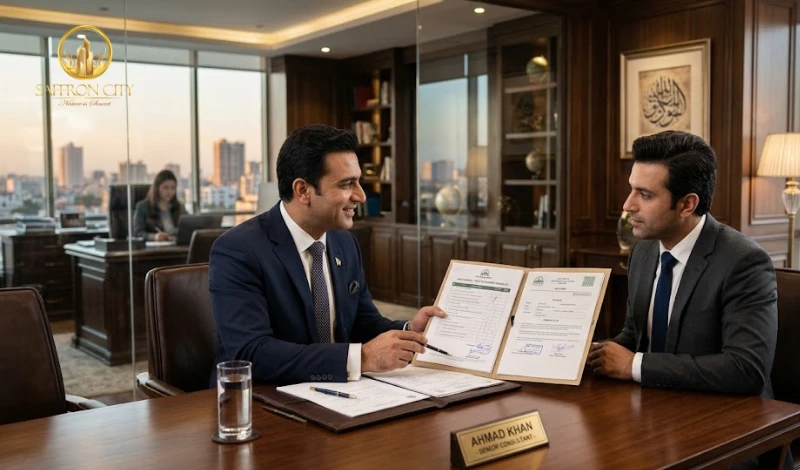
Knowing which category you’re in tells you what to collect. Knowing the stage tells you when to demand it and this is where a lot of buyers get outmaneuvered, because sellers and agents are happy to push paperwork to “later” if you don’t ask upfront.
Before You Pay Any Token or Bayana
Before a single rupee changes hands, you should already have seen:
- The complete title chain (or allotment/possession chain for a file or possession plot)
- A copy of the NOC not a verbal assurance that “it’s approved”
- Confirmation there are no outstanding dues on the plot
- The developer’s or authority’s approval status, checked independently, not just taken from the seller’s word
If a seller or agent hesitates to show you these before a token, that hesitation is information. Walk away or slow down.
At Token / Bayana Stage
Once you’ve verified the basics and you’re ready to commit a deposit:
- Get everything in writing the payment terms, the balance due, and the penalty if either side backs out
- The agreement should be on stamp paper matched to the property’s value
- Keep a copy of the receipt for the token/bayana itself this becomes evidence if the deal falls apart
At Transfer / Registration
This is where the ownership legally moves:
- NDC application submitted and cleared
- Registrar’s office visit for the sale deed, with both parties (or authorized representatives) present
- E-stamp paper purchased for the value of the sale deed
After Registration Don’t Stop Here
This is the step people skip, and it’s a costly one. Registering the sale deed does not automatically update government revenue records. That’s what mutation is for.
- Apply for mutation (Inteqal) so the land revenue department records you as the new owner
- Get your updated Fard showing your name
- Transfer utility connections into your name where applicable
Skip mutation, and years later you may find your name isn’t actually reflected where it matters for taxes, resale, or inheritance even though you have a registered sale deed sitting in a drawer.
5. How to Verify Each Document Yourself
“Hire a lawyer” is fine advice, but you shouldn’t be completely dependent on someone else to know if something looks wrong. Here’s what you can actually do yourself:
- Cross-check the Fard against the mouza/patwari record. The Fard should match what’s on file at the local revenue office, not just what the seller hands you.
- Use the provincial e-registration/land record portal. Punjab’s system (PLRA), Sindh’s digital land record initiative, and the Board of Revenue portals in KP and Balochistan let you check ownership status and mutation details online in most cases. It won’t replace a physical visit for final verification, but it’s a fast first filter.
- Match CNIC numbers exactly across the CNIC copy, the sale deed, and the Fard. A single mismatched digit is either a clerical error worth questioning or a sign of something more serious.
- Confirm the plot isn’t double-registered. This happens more than people expect the same plot sold to two different buyers using manipulated paperwork. The online portal check helps here too.
Red Flags That Signal a Forged or Fake Document
Keep an eye out for:
- Watermarks, stamps, or seals that look inconsistent or slightly “off” compared to a genuine sample from the same authority
- CNIC formatting or spelling that doesn’t match official records
- No corresponding entry when you check the online land record system
- A seller who’s noticeably reluctant to let you verify documents independently, or who insists on rushing the transaction before you can check
None of these alone proves fraud, but two or more together is a strong reason to pause and get a property lawyer or licensed deed writer involved before you pay anything further.
6. Special Cases
Documents Overseas Pakistanis Need
If you’re buying from abroad, the standard list above still applies, but you’ll also need:
- NICOP (National Identity Card for Overseas Pakistanis)
- Power of Attorney, attested by the Pakistani embassy or consulate in your country of residence, if someone is handling the transaction on your behalf
- FBR non-resident filer documentation, relevant to the tax side of the purchase
A word of caution here: Power of Attorney transactions are exactly where a lot of fraud has historically happened, because it’s harder for the actual owner (sitting overseas) to catch a problem in real time. If you’re using a POA, ask for more verification, not less video calls with the registrar’s office, independent legal counsel back home, and direct confirmation calls to the land record office are all worth the extra effort.
Filer vs. Non-Filer How It Changes Your Paperwork
Whether you’re an active taxpayer (a “filer”) or not affects the tax documentation required at registration, and it affects your withholding tax exposure on the transaction. Before you buy, check your status on the FBR’s active taxpayer list, and confirm current applicable rates directly with FBR or a tax consultant. These figures get revised, so treat any number you read online (including this one) as indicative rather than final.
7. What Each Document-Related Step Actually Costs
Budget for these on top of the plot’s sale price they add up more than first-time buyers expect:
- Stamp duty a percentage of the declared property value, varies by province
- Mutation fee charged when updating the revenue record
- NDC fee charged by the housing society or authority
- Transfer fee separate from mutation, charged by the society for processing the ownership change
- E-stamp charge for the digital stamp paper used in the sale deed
Exact percentages and amounts vary by province, city, and property value, and they change periodically, always confirm current figures with the relevant registrar or a tax consultant before budgeting your final numbers.
8. Quick Reference Your Document Checklist
Use this as your final sanity check before you commit to any plot purchase:
- Identified which purchase type applies (file, possession, resale, or agri-converted)
- Collected every document listed for that purchase type
- Verified the seller’s CNIC matches across all documents
- Cross-checked ownership on the relevant provincial land record portal
- Confirmed NOC and approval status independently not just on the seller’s word
- Got the sale agreement in writing, on correctly valued stamp paper
- Completed NDC application before transfer, where applicable
- Registered the sale deed at the correct registrar’s office
- Applied for mutation (Inteqal) after registration don’t stop at the sale deed
- Confirmed your filer/non-filer status and its tax implications before finalizing payment
Conclusion
The real answer to “what documents do I need to buy a plot” was never a single list it depends on whether you’re booking a file, taking possession in a society, buying resale from an individual, or picking up converted agricultural land, and it depends on what stage of the deal you’re standing in. Once you know which category you’re in, the paperwork stops being a mystery and becomes a Documents Do You Actually Need to Buy a Plot in Pakistan you can actually follow and verify yourself, rather than taking anyone’s word for it.
If there’s one habit worth carrying out of this guide, it’s this: verify before you pay, not after. Every stage above token, transfer, registration, mutation has a document trail. Insist on seeing it before you hand over money, not once you’re already committed. That single shift in sequence is what separates a smooth plot purchase from a years-long dispute.