
Comparing DHA, Bahria Town & GT Road Societies is a debate you’ve probably heard on repeat in property Facebook groups or across from an agent in Islamabad or Rawalpindi but the conversation almost always skips a third option quietly eating up investor money: the societies strung along GT Road, like Faisal Hills, Gulberg Greens, Rudn Enclave, Citi Housing Rawat, and B-17. This isn’t a “which one wins” piece it’s a working comparison of pricing, real estate ROI, and legal risk, so you can match your budget and risk appetite to the right category instead of guessing based on whichever billboard you drove past last.
1. What Are DHA, Bahria Town & GT Road Societies?
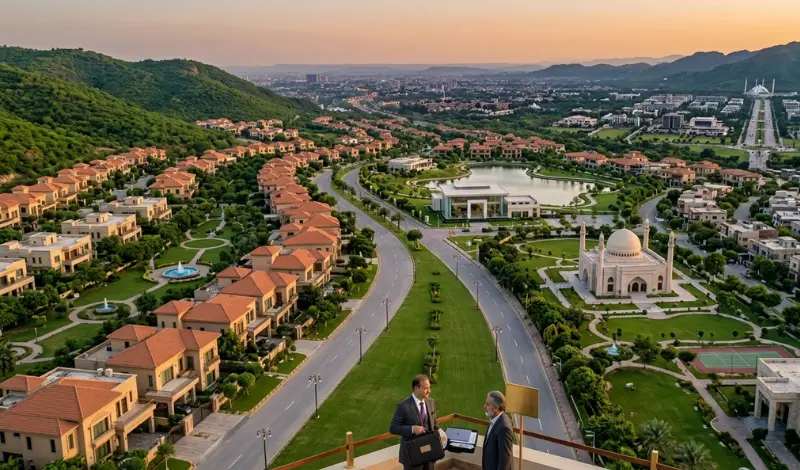
DHA (Defence Housing Authority) is government-linked, developed under military oversight, and it shows in how it operates strict building bylaws, controlled town planning, and a reputation that’s been built over decades rather than marketed into existence. It’s not the cheapest option in any city it operates in, and it doesn’t try to be.
Bahria Town is the opposite model a private real estate empire built by Malik Riaz starting in the late 1990s. Where DHA leans formal, Bahria leans spectacle: themed communities, an Eiffel Tower replica, dancing fountains, golf courses. It’s designed to sell a lifestyle first and a plot second, and for a lot of buyers, that’s exactly the appeal.
GT Road housing societies Islamabad Rawalpindi are where this gets interesting, because it’s not one project it’s a category. The Grand Trunk Road corridor between and around Islamabad, Rawalpindi, and out toward Taxila has become home to a cluster of newer, mostly private affordable housing societies near Islamabad schemes: Faisal Hills, Faisal Town Phase 2, Gulberg Greens, Rudn Enclave, Citi Housing Rawat, B-17, Silver City. Some are RDA-approved, some fall under CDA, some are still working through approval. What ties them together isn’t a shared developer it’s a shared position in the market: lower entry price, higher growth ceiling, and a much wider spread of legal maturity from project to project.
Why GT Road Societies Get Left Out of the Comparison
Every comparison article you’ll find treats this as a two-horse race, and there’s a simple reason: DHA Bahria Town price comparison Town are single, recognizable brands you can put a name and a price chart against. GT Road societies aren’t one thing they’re a dozen different developers competing for the same budget-conscious buyer along the same stretch of road. That makes them harder to summarize, so most writers just skip them. But if you’re actually deciding where to put your money, ignoring an entire price tier because it’s inconvenient to categorize doesn’t help you.
2. Price Comparison: DHA vs Bahria Town vs GT Road Societies (2026)
Before the numbers prices in this market move by phase, block, and month, so treat these as a snapshot of where each category typically sits, not a quote. Always check live listings before you commit to anything.
| Category | Residential Plot (5 Marla) | Entry Budget Level | Typical Buyer |
|---|---|---|---|
| DHA (Islamabad/Lahore) | ~PKR 1.2 – 1.8 crore+ | High | Corporate buyers, overseas Pakistanis, long-term investors |
| Bahria Town | ~PKR 65 lakh – 1.5 crore | Mid to high | Families, lifestyle buyers, rental-income investors |
| GT Road Societies | ~PKR 15 – 60 lakh | Low to mid | First-time buyers, growth-focused investors |
The gap between the top and bottom row is the whole story here. You can get into a GT Road society for roughly a tenth of what a comparable DHA plot costs. That’s not a small difference in accessibility it’s the reason someone with PKR 20-30 lakh saved up has a real path into property ownership at all, instead of needing to wait years to afford a DHA entry point.
Why GT Road Societies Have a Lower Entry Point
It’s not that these societies are lower quality by default it’s the economics of where and when they were built. Land further from established city centers costs less to acquire. Many of these projects launched more recently, so early-phase pricing hasn’t caught up to fully-developed sectors yet. And without decades of brand equity behind them, they can’t charge the premium that DHA or Bahria command purely on reputation. As development catches up roads, utilities, the Ring Road interchange, commercial zones that price gap tends to close, which is exactly the bet early GT Road investors are making.
3. ROI & Investment Potential Compared
DHA plays the long game. Prices climb steadily, rarely spike, and rarely crash either the government backing creates a price floor that’s held up even during broader market slowdowns. If you’re the kind of investor who wants to buy something, forget about it for eight years, and come back to steady appreciation, this is built for you.
Bahria Town sits in the middle. It moves faster than DHA in growth phases new sectors opening up have delivered real percentage gains but it’s also weathered actual legal turbulence in the past, including a well-known 2019 Supreme Court settlement. That’s mostly behind it now, and sentiment has recovered, but it’s a reminder that private developers carry a different risk profile than a state-backed authority, even a well-run one.
GT Road societies are the high-variance play. Take Faisal Hills as a real example: plots that were priced in the low tens of lakhs when the project was newer have appreciated meaningfully as Faisal Town Group delivered on infrastructure and the area’s connection to Taxila and the M-1 motorway matured. That’s the upside case. The downside case is just as real plenty of GT Road corridor projects have stalled for years because of unresolved NOC approved status or a developer that overpromised on delivery timelines. Same category, wildly different outcomes, and the difference usually comes down to how carefully the buyer checked legal status verification before booking.
Rental Yield Comparison
- DHA lower yield in percentage terms, but near-zero vacancy. Corporate tenants (banks, clinics, IT firms) sign longer leases and rarely default, which is why overseas investors especially favor it for passive income.
- Bahria Town stronger yields, particularly in high-footfall commercial zones like Phase 7’s Food Street in Islamabad, where retail and F&B tenants pay a premium for consistent foot traffic.
- GT Road societies yield potential is entirely location and development-stage dependent. A fully developed block with residents already living there can rent reasonably well; a half-built sector with no utilities yet will sit empty regardless of how cheap the plot was.
4. Legal Status & Risk: What Buyers Often Get Wrong
This is the section most comparison articles skip entirely, and it’s arguably the most important one if you’re putting real money into a GT Road society.
DHA carries the lowest legal risk in the market, full stop. It’s regulated at the government level, and its documentation process is about as close to bulletproof as Pakistani real estate gets.
Bahria Town today is well-documented and operationally mature, but it’s worth knowing its history being privately owned means it’s answerable to different oversight than a government authority, and that’s shaped how investors think about it even now that operations have stabilized.
GT Road societies are where due diligence actually matters, because “approved” doesn’t mean the same thing everywhere. Some projects have full CDA or RDA approval with an issued No Objection Certificate (NOC), which means development is legally authorized. Others only have an approved Layout Plan (LOP) essentially a blueprint sign-off without the NOC that actually greenlights construction and utility connections. Buyers regularly confuse the two, book a plot thinking it’s fully cleared, and find out years later that development is stuck in regulatory limbo. Then there’s a third tier operating under Tehsil Municipal Administration (TMA) jurisdiction rather than RDA or CDA, which comes with its own, looser set of rules.
How to Verify a Society’s Legal Status Before Buying
- Check the RDA’s official private housing schemes portal for anything on the Rawalpindi side of the corridor
- Check the CDA’s private best housing society to invest in 2026 schemes list for Islamabad/ICT-side projects
- Confirm specifically whether the project has an issued NOC, not just an approved LOP ask the developer directly and get it in writing if possible
- Look into the developer’s track record on previous projects did they deliver on time, or are there other stalled schemes under their name?
- Never take a marketing brochure or agent’s word as final confirmation cross-check against the authority’s own website every time
5. Location, Accessibility & Lifestyle
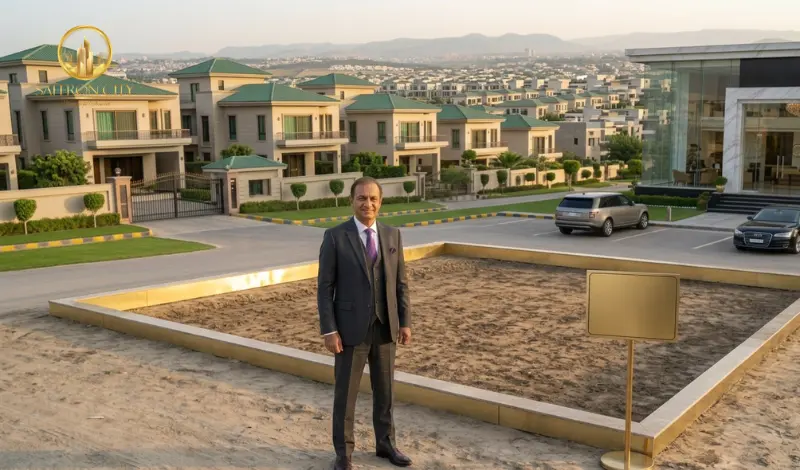
DHA tends to sit centrally, with planned proximity to expressways and airports built into the original design you’re rarely fighting traffic to get anywhere important. Bahria Town builds outward instead, creating self-contained townships with their own internal shuttle systems and commercial hubs, so the trade-off for being slightly further out is that you rarely need to leave.
GT Road societies benefit from something structural that’s easy to underestimate: the corridor itself is one of the oldest and most heavily used trade routes in the region, and it’s increasingly tied into new motorway and Ring Road interchange development. That’s not incidental improving connectivity along this stretch is a core part of the investment case for projects like Faisal Hills and Rudn Enclave, where accessibility is expected to improve faster than it would in an already-mature area.
6. DHA vs Bahria Town vs GT Road Societies Side-by-Side Summary
Enough context, here’s how the three stack up when you put them side by side.
| Factor | DHA | Bahria Town | GT Road Societies |
|---|---|---|---|
| Ownership | Government/military-backed | Private developer | Mostly private, mixed regulatory status |
| Entry Budget | High | Mid–high | Low–mid |
| Growth Style | Slow, stable | Moderate, steady | High potential, high variance |
| Legal Risk | Lowest | Low–moderate | Varies by project verify individually |
| Best For | Long-term security, expats, high-budget investors | Families, lifestyle buyers, rental income | First-time buyers, aggressive growth investors |
| Rental Demand | Corporate tenants, stable | Strong, family/retail tenants | Growing, location-dependent |
7. Which One Should You Choose?
Strip away the marketing and it comes down to three questions: what’s your budget, how long can you leave the money in, and how much uncertainty can you tolerate while you wait.
If you’ve got PKR 1.5 crore or more and your priority is security over speed, DHA is the straightforward choice you’re paying for the guarantee, not the upside.
If your budget sits in the middle and you want a place that’s actually enjoyable to live in while it also appreciates, Bahria Town covers both you get lifestyle and reasonably strong rental demand without DHA’s price ceiling.
If you’re working with a smaller budget and you’re comfortable doing the legwork checking NOC status, visiting the site, following the developer’s track record GT Road societies offer a growth ceiling neither of the other two can match at the same entry price. The catch is that “comfortable doing the legwork” part isn’t optional. Skip it and you’re gambling, not investing.
One thing worth saying plainly: a lot of serious investors don’t pick just one category. It’s common to see a DHA plot held for stability, a Bahria Town property for rental income, and a GT Road plot as the higher-risk, higher-upside piece of the portfolio. Diversifying across all three isn’t hedging your bets out of indecision it’s matching different parts of your money to different jobs.
For Real Estate Agents: Advising Clients Across These Three Categories
If you’re the one fielding these questions from clients, the framework shifts slightly. A client’s risk profile matters more than their stated budget someone with DHA-level capital appreciation who’s genuinely risk-averse shouldn’t be steered toward a GT Road plot just because the margins are better for you. Set expectations early on GT Road societies specifically: clients need to understand upfront that “developing” can mean anywhere from two years to indefinite, depending on the project. And make legal-status verification part of your actual sales process, not an afterthought walking a client through an RDA approved vs CDA approved societies check yourself, instead of just asserting a project is “approved,” is one of the fastest ways to build the kind of trust that turns into repeat business and referrals.
Conclusion
There’s no single winner in this comparison, and honestly, any article that tells you there is one is selling something. DHA vs Bahria Town investment comparison is the safety play. Bahria Town is the balance between lifestyle and returns. GT Road societies are where the real upside lives, if you’re willing to do the legal homework that upside demands. The smartest move isn’t picking a side in the DHA-vs-Bahria debate it’s understanding that GT Road societies were never supposed to be left out of the conversation in the first place, and building your decision around where your budget, patience, and risk tolerance actually sit.
Frequently Asked Questions
Is DHA a better investment than Bahria Town in 2026?
Neither is universally “better” DHA offers steadier, lower-risk appreciation, while Bahria Town offers stronger short-to-mid-term returns and rental yield at a lower entry cost. The right answer depends on your budget and timeline.
Are GT Road societies legally safe to invest in?
Some are, some aren’t and that’s the point. Legal status varies project by project, so you need to check whether a specific society has an issued NOC (not just an approved layout plan) before booking, rather than assuming the whole category carries the same risk.
Which option has the highest rental yield?
Bahria Town’s commercial zones, particularly high-footfall areas, tend to post the strongest yields. DHA offers lower percentage yield but the most reliable occupancy. GT Road societies can outperform both once fully developed, but yield is close to zero in early-stage sectors with no residents yet.
Can first-time buyers afford DHA or Bahria Town?
DHA is out of reach for most first-time buyers without significant savings. Bahria Town is more accessible, especially its smaller plot sizes, but GT Road societies remain the most realistic entry point for someone buying their first property on a modest budget.
What’s the difference between RDA and CDA approval?
RDA (Rawalpindi Development Authority) regulates housing schemes on the Rawalpindi side; CDA (Capital Development Authority) regulates the Islamabad/ICT side. A project can only be verified through the authority that actually has jurisdiction over its location checking the wrong one won’t tell you anything useful.