
If you’ve spent any time talking to a real estate agent in Pakistan, you’ve probably heard the phrase “that’s possession” tossed around like it settles the whole conversation. It doesn’t. Possession status is one of the most misunderstood parts of buying a plot, and it’s also one of the few things that can single-handedly decide whether your investment sits quietly and grows, or turns into a five-year waiting game with your money stuck in limbo.
So let’s actually unpack it what a possession plot is, what a non-possession plot is, and why the difference matters a lot more than most people realize until they’re the ones stuck waiting.
1. What Is a Possession Plots vs Non-Possession Plots?
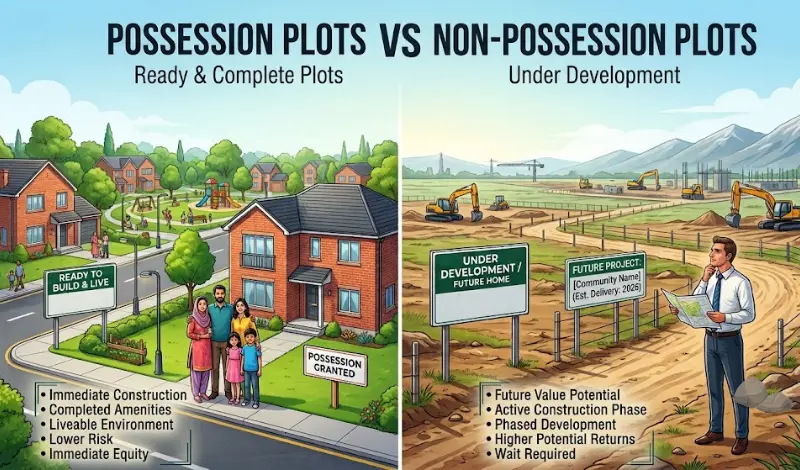
A possession plot meaning in real estate is land that has been physically handed over to you. The developer or the development authority has completed enough work roads, boundary markers, basic utilities that you can walk onto your exact plot, point at the corners, and legally start construction. You’re not buying a promise anymore. You’re buying land you can stand on.
A non-possession plot is still yours on paper it has a number, it’s mapped on the master plan, you have an allotment letter but the developer hasn’t handed it over yet. Maybe the roads aren’t paved. Maybe the sewerage lines aren’t in. Maybe the whole block is still six months (or six years) away from being “possession-ready.” You own it, but you can’t build on it, live on it, or even always find the exact boundary without a survey team.
Here’s the simplest way to think about it:
- Possession plot = ownership + physical control + the right to build right now
- Non-possession plot = ownership + a legal claim, but no physical control yet
That’s the whole concept in one sentence. Everything else in this article is really just working out the consequences of that one difference.
2. Possession vs Non-Possession Isn’t the Same as Plot vs File
This is where most articles on this topic and honestly, most agents get sloppy, and it’s worth slowing down here because getting this wrong is what causes people to overpay or get blindsided.
People often use “file” and “non-possession plot” interchangeably. They’re not the same thing. There are actually two separate questions being asked, and they don’t always move together:
- Legal form Do you have a plot file vs possession plot (a contractual promise of a future plot, with no specific location yet) or a plot (a numbered, mapped, physically identifiable piece of land)?
- Plot balloting and development status Has that plot been handed over to you (possession) or not (non-possession)?
A plot can absolutely be non-possession. It’s balloted. It has a number. You can find it on the master plan. And it can still sit undeveloped for years before the developer hands it over. Meanwhile, a file hasn’t even reached the “numbered plot” stage yet it’s a step further back in the process.
Here’s the matrix that makes this click:
| Possession | Non-Possession | |
|---|---|---|
| File | Rare a file is a pre-plot stage; possession doesn’t apply yet | Standard file: a promise of a future plot, no fixed location assigned |
| Plot | Numbered, mapped, developed, and physically handed over buildable now | Numbered, mapped, but development is incomplete or handover hasn’t happened |
Once you see it laid out this way, the confusion mostly disappears. A “cheap plot” someone is selling you might not be cheap because it’s a file it might be a perfectly legitimate, numbered plot that’s simply non-possession. The price gap is coming from the second axis, not the first.
3. Possession Plots vs Non-Possession Plots Side-by-Side Comparison
Here’s the full comparison, the kind of thing you’d want printed out before sitting down with an agent.
| Factor | Possession Plot | Non-Possession Plot |
|---|---|---|
| Physical handover | Yes, formally transferred | No, still held by developer/authority |
| Construction | Can start immediately | Must wait for handover |
| Price | Higher you’re paying for certainty | Lower the discount reflects risk and wait time |
| Bank financing/mortgage | Usually eligible | Usually not eligible |
| Resale liquidity of possession plots | Faster, wider buyer pool | Slower, mostly attracts other investors |
| Risk level | Low | Moderate to high |
| Documentation | Possession letter/certificate | Allotment letter only |
| Ideal buyer | End-users, risk-averse investors | Long-horizon investors |
| Recommended holding period | Flexible | 3–5+ years |
4. Why Non-Possession Plots Are Cheaper (And What You’re Actually Paying For)
The discount on a non-possession plot risk Pakistan isn’t a bargain it’s a risk premium working in reverse. You’re being compensated for two specific things: development risk and timeline risk.
Development risk means the physical work isn’t done yet. Roads might still be dirt tracks. Sewerage lines might exist only on a blueprint. Water and electricity connections might be “coming soon” for longer than anyone would like.
Timeline risk means the possession date the developer quoted you might slip. Not because they’re necessarily dishonest infrastructure projects run late everywhere but because a possession date on a brochure is a target, not a guarantee.
Here’s a real-world pattern worth knowing: in DHA Lahore’s Phase 9 Prism, blocks with possession already granted (like Q, R, F) have consistently traded at a meaningful premium over non-possession blocks of comparable size, sometimes 20–30% higher per marla. Investors who bought early in non-possession blocks and held through to possession captured that appreciation. But investors who bought late close to the actual possession announcement ended up paying near-possession prices without the guarantee, because the market had already priced in the expectation. That’s the trap: the discount only rewards you if you’re early. Buy late in a non-possession block, and you get all the risk with none of the discount.
When the discount is worth it:
- You have a genuinely long investment horizon five years or more
- The developer has a track record of delivering possession roughly on schedule
- You don’t need to build or move in anytime soon
When it’s not:
- You need to construct or move in within the next year or two
- You’re planning to use a bank loan for non-possession plot to build
- The developer already has a history of missed possession deadlines
5. Bank Financing and Loan Eligibility

This is the part almost nobody talks about, and it’s often the deciding factor for regular buyers rather than pure investors.
Most banks in Pakistan require the plot to have physical possession or at least be substantially near completion before they’ll approve a construction loan or a mortgage against it. A non-possession plot is treated as weaker collateral, and in a lot of cases, banks simply won’t finance against it at all.
So if your plan is “buy the plot now, take a construction loan eligibility for plots from the bank in two years,” a non-possession plot can quietly derail that entire plan. You could end up owning land you can’t yet build on and can’t yet finance construction for a frustrating spot to be in. If financing is part of your plan at all, call your bank before you buy, not after, and ask them directly whether they’ll lend against the specific block or phase you’re considering.
6. Documentation Differences Buyers Should Ask For
The paperwork you receive is a direct reflection of where the plot stands, so it’s worth knowing exactly what to ask for.
For a possession plot, you should be handed:
- A possession letter vs allotment letter or possession certificate
- A No Demand Certificate (NDC), confirming no outstanding dues
- Site demarcation records showing the exact physical boundaries
For a non-possession plot, you’ll typically only have:
- An allotment letter
- Payment or installment records
- No possession certificate because none exists yet
Here’s a wrinkle worth watching for: some developers advertise “instant possession” the moment you make your down payment. That’s developer-issued possession essentially the developer telling you that you can go ahead and treat it as possessed. It is not the same as authority-verified possession, where the relevant development authority (RDA, CDA, LDA, or whichever governs the area) has formally confirmed and recorded the handover. The two can look identical in a sales conversation and very different in a legal dispute. If a developer tells you possession is “instant,” ask specifically for the authority-issued possession letter, not just their internal confirmation.
7. Tax and Ongoing Cost Timing
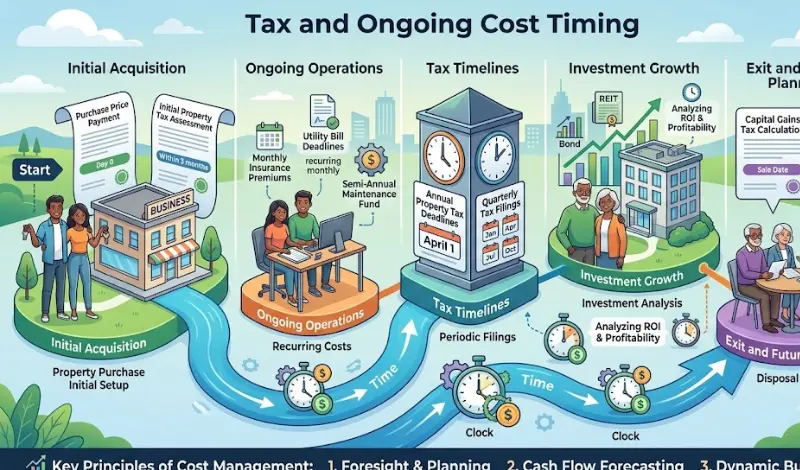
Something that rarely makes it into the sales pitch: property tax and society maintenance charges typically start counting from the date of possession, not the date you booked the plot. If you’re comparing total cost between a possession plot and a non-possession one, don’t just compare sticker prices factor in when these ongoing costs actually kick in.
Capital Gains Tax considerations are also often tied to the possession or transfer date rather than the original booking date, which matters if you’re planning to sell within a few years. It’s worth a quick conversation with a tax advisor before you assume your holding period started the day you signed the booking form.
8. How to Verify Plot Possession Status Yourself
Don’t take a developer’s word for it verify independently. Here’s a practical checklist:
- Request the authority-issued possession or demarcation letter, not just the developer’s internal paperwork
- Visit the site in person and check for completed roads, working sewerage, and an active electricity connection not just a rendering on a brochure
- Cross-check the developer’s “development percentage” claims directly with the relevant authority (RDA, CDA, LDA)
- Ask specifically for block-wise or sector-wise possession status a project can be “80% developed” while your specific block is still untouched
- If you’re buying from overseas, use a trusted local representative or lawyer to physically inspect the site rather than relying on video calls or photos sent by the seller
9. Red Flags to Watch For in Non-Possession Plots
- The developer has no fixed, verifiable possession timeline just vague reassurances
- The project has a track record of repeated possession delays
- The NOC verification for housing society has been “in process” for years with no real movement
- Marketing language blurs “booking confirmed” with “possession granted” treat this as a warning sign, not a technicality
Conclusion
Possession status isn’t a minor technicality it’s one of the clearest signals of how much risk, patience, and flexibility a plot actually demands from you. A possession plot hands you certainty: you can build now, finance now, and sell quickly if you need to. A non-possession plot hands you a discount, but that discount is a trade for time and risk, not free money.
The real mistake isn’t choosing non-possession over possession, or the other way around it’s not knowing which one you’re actually buying, and assuming a numbered, mapped plot automatically means you can start construction tomorrow. Ask the right questions, get the authority-issued paperwork, and match the plot type to your actual timeline whether you’re buying your first home, advising a client, or building a long-term portfolio.