
You found the plot, the price looked fair, and your payment is ready but here’s the catch: hidden charges when buying a plot in Pakistan almost always push your final bill 15% to 30% above the number on the brochure, thanks to government taxes, developer charges, agent commissions, and fees nobody mentions until you’re already committed. This guide breaks down every one of these charges with a real worked example, so whether you’re a first-time buyer, an agent advising a client, or an investor evaluating a project, you’ll know exactly what to ask before handing over a single rupee.
Why “Hidden Charges” Catch Plot Buyers Off Guard in Pakistan
Here’s the thing about plot marketing in Pakistan: the price you see first is almost always the smallest number the developer can legally show you. It’s the base rate, sometimes not even including development charges, and it’s designed to get you to pick up the phone.
Once you’re on a call or in an office, the real payment structure starts revealing itself one layer at a time. Booking amount. Allocation charges. Development charges, if they weren’t already baked in. And that’s before government taxes even enter the picture.
Plots are riskier here than constructed houses too, and there’s a specific reason for it. A built house has a fixed, visible product. A plot, especially in a society still under development, is a promise. You’re paying based on a master plan and a payment schedule, not a finished asset, which means there’s more room for a developer to add charges as the project matures.
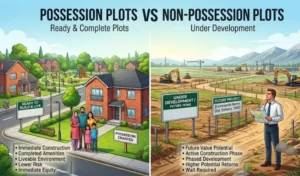
There’s also a distinction that trips up a lot of buyers: file-based vs on-ground plot plots versus on-ground/possession plots. A file is essentially a slot in the society’s records, a paper claim to a future plot. An on-ground plot has already been physically demarcated and is closer to possession. File-based plots are cheaper upfront but come with more uncertainty, and the cost structure around them, transfer charges, allocation timing, possession premiums, works differently than it does for a plot you can walk on today.
Who Ends Up Overpaying the Most
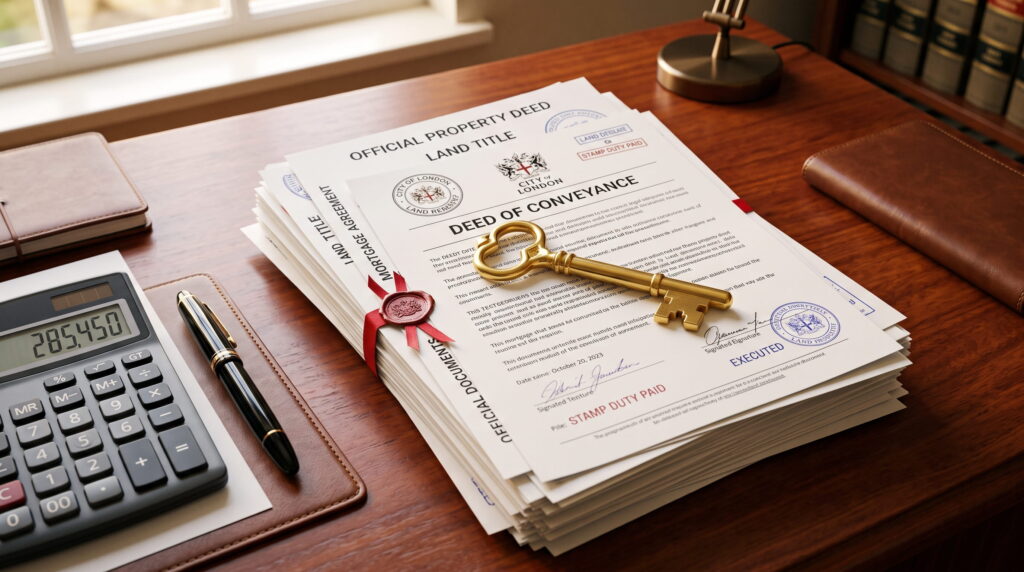
- First-time local buyers who’ve never dealt with stamp duty, CVT, or withholding tax on property Pakistan before and don’t realize these aren’t optional
- Overseas Pakistanis who rely on a relative or an agent to handle everything and never see the actual documents themselves
- Investors trying to flip quickly who don’t factor in capital gains tax or withholding tax on property Pakistan triggers tied to how long they hold the property
If you fall into any of these three groups, the sections below are written specifically for you.
Government Taxes & Statutory Fees (The “Official” Hidden Costs)
These are the charges nobody can waive, negotiate away, or bundle into a “special discount.” They’re set by federal and provincial law, and they apply whether you’re plot buying costs in Pakistan from a small developer or a large, well-known society.
One important note before we go further: these rates change almost every year with new Finance Acts. What’s accurate today may shift in the next budget cycle, so always confirm current rates with FBR or your provincial revenue authority before you finalize a transaction. Treat the numbers below as a starting framework, not a locked-in quote.
Stamp Duty is charged on the DC (Deputy Collector) rate or the declared property value, and it’s paid as part of registering your sale deed. Rates differ from province to province, so a plot in Punjab won’t carry the exact same stamp duty percentage as one in Sindh or Khyber Pakhtunkhwa.
Capital Value Tax (CVT) applies at the point of ownership transfer in provinces where it’s still levied. Since the 2019 reforms, its application has shifted between federal and provincial jurisdiction depending on the property type, so it’s worth confirming whether it applies to your specific transaction.
Registration Fee is the cost of legally recording the transfer at the land registry office, generally calculated as a percentage of the property’s value. It’s a small percentage, but on a high-value plot it adds up to a real number fast.
Withholding Tax (Advance Tax) hits both buyer and seller, and here’s where a lot of people get caught: the rate depends on whether you’re a tax filer or a non-filer. Non-filers pay noticeably more, which is one of the clearest financial reasons to make sure your tax filing status is active before you buy or sell.
Capital Gains Tax matters most if you’re an investor. Sell within the taxed holding period and you’ll owe CGT on your profit; hold past that window and the liability changes. If flipping plots is part of your strategy, this single tax can make or break your actual return.
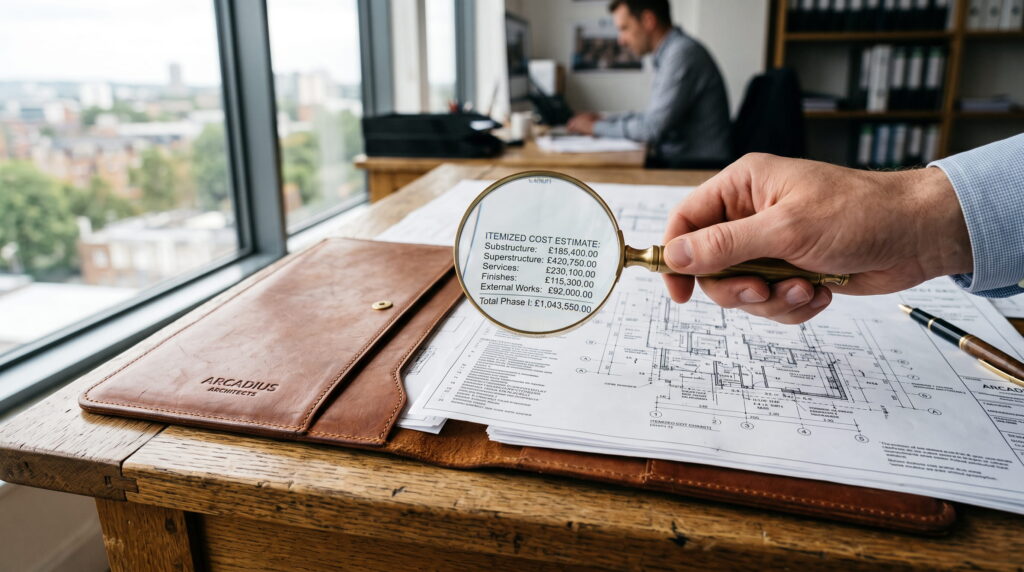
| Charge | Who Pays | Typical Basis | Paid To |
| Stamp Duty | Buyer | Percentage of DC value (varies by province) | Provincial government |
| Capital Value Tax (CVT) | Buyer | Percentage of value, where applicable | Provincial government |
| Registration Fee | Buyer | Percentage of property value | Land registry office |
| Withholding/Advance Tax | Buyer & Seller | Filer vs. non-filer rates differ | FBR |
| Capital Gains Tax | Seller | Based on holding period | FBR |
Verify exact current percentages with FBR or your provincial authority before budgeting, since these are the figures most likely to shift year to year.
Developer & Housing Society Charges (Often the Biggest Surprise)
This is the category that catches the most people off guard, and it’s also the one most guides gloss over. If you’re plot buying costs in Pakistan into an installment-based society (which describes the majority of new housing projects in Pakistan right now), your payment doesn’t happen in one lump sum. It moves through stages, and each stage can carry its own charge.
The typical lifecycle looks like this: Booking → Allocation → Monthly Installments → Bi-Annual Installments → On-Possession Charges. Understanding what happens at each stage is the difference between budgeting accurately and getting blindsided.
Booking and allocation charges are often bundled together in marketing (you’ll see “10% booking, 10% allocation” structures constantly), but they’re technically two different things. Booking reserves your spot in the queue. Allocation is when the society actually assigns you a specific plot number and block. Some buyers pay the booking amount assuming that’s the bulk of their upfront cost, only to find allocation adds an equal amount on top almost immediately.
Development charges cover the actual infrastructure: roads, sewerage lines, electricity connections. Sometimes these are folded into the advertised total price. Sometimes they’re billed as a separate line item later in the payment plan. This is one of the first questions you should ask point-blank: is the quoted price development-charges-inclusive, or will that bill arrive separately?
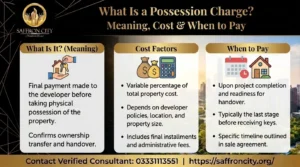
On-possession charges are the final payment due when you actually take control of the plot, and they’re rarely small. Depending on the society, this can be 15% to 20% of the total price, due all at once, right when you’re also budgeting for transfer and registration costs. Buyers who’ve been paying steady monthly installments for two or three years sometimes forget this lump sum is still coming.
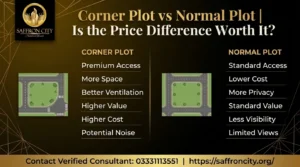
Location and premium charges are the ones almost nobody mentions until you’ve already picked your plot. Corner plots, park-facing plots, and plots on the main boulevard or commercial frontage typically carry an extra charge, sometimes adding another 5% to 20% on top of the base rate. If you fell in love with a specific plot location during your site visit, ask about the premium before you get attached.
Membership and maintenance charges round out this category. Some societies require a one-time membership fee before your transfer process can even begin, and nearly all of them charge ongoing annual maintenance once you take possession.
Legal, Agent & Documentation Costs
Beyond taxes and society fees, there’s a whole layer of costs tied to actually getting the paperwork right.
Agent or broker commission typically runs 1% to 2% of the transaction value, and depending on the deal, both buyer and seller might be charged separately. Get this number in writing before you engage an agent. A verbal “don’t worry about it” is not a commission agreement.
Legal and documentation fees cover the lawyer or deed writer who drafts your sale deed, plus any due diligence work like checking for encumbrances or verifying that the NOC verification housing society claims made by the developer actually hold up. This isn’t an expense to skip to save money; a few thousand rupees spent on proper due diligence can save you from a plot with unresolved litigation attached to it.
Sales deed and registry (inteqal) charges are related but distinct processes. Registry formally documents the sale; inteqal is the mutation of ownership records. Both typically involve a modest fee, but skipping either one leaves your ownership legally incomplete, which becomes a much bigger problem down the line.
Overseas Pakistani-Specific Hidden Costs
If you’re buying from abroad, there’s an entire layer of costs that local buyers never think about, and almost nothing written about hidden charges in Pakistan actually covers this.
NICOP processing or renewal can be a prerequisite for certain transactions, and if yours has expired, that’s a cost and a delay you need to plan for.
Power of Attorney is usually how overseas buyers handle the transaction without being physically present, and it needs two things: proper legal drafting, and attestation through the Pakistani embassy or consulate in your country of residence. Both cost money, and both take time, so this isn’t something to arrange the week before your payment is due.
Currency conversion and remittance handling matters more than people expect. Sending money through proper banking channels (which you should always do, both for legal compliance and to access certain tax benefits available to overseas Pakistani plot buying costs) involves conversion spreads and transfer fees that eat into your budget in ways a domestic buyer never experiences.
Hiring a local representative to physically verify the plot, attend site visits, and confirm documents in person is optional, but for many overseas buyers it’s the only way to avoid relying entirely on an agent’s word. That service comes at a cost, but it’s often the cheapest insurance you can buy against fraud.
Costs That Appear After Possession
The charges don’t stop once you’ve paid the on-possession amount. A few more show up right after.
Utility connection charges for electricity, gas, and water are almost never included in the plot price. Budget for these separately once you’re ready to start construction or move in.
Late payment penalties are the cost nobody talks about until they’ve already been hit with one. If you’re on a multi-year installment plan penalty charges and miss a monthly or bi-annual payment, most societies apply a surcharge, commonly in the range of 1% to 2% per month, or a flat penalty fee. If your income is irregular or you’re financing this purchase tightly, this is one of the most important lines to understand upfront.
Pending dues and clearance certificates matter most if you’re buying a resale plot rather than a fresh booking. Always request a clearance certificate from the seller confirming there are no outstanding utility bills or society transfer fee Pakistan dues attached to the property. Otherwise, those unpaid dues can quietly become your problem.
Worked Example: What a “Cheap” Plot Actually Costs
Let’s make this concrete. Say you’re looking at a 5 Marla residential plot in an installment-based society, advertised at PKR 40,00,000.
Here’s how the real cost builds up:
- Advertised price: PKR 40,00,000
- Booking (10%): PKR 4,00,000
- plot allocation charges (10%): PKR 4,00,000
- Development charges (if billed separately, assume 5%): PKR 2,00,000
- On-possession charge: PKR 8,00,000
- corner plot premium charges (if applicable, assume 7%): PKR 2,80,000
- Stamp duty + CVT + registration (roughly 5% combined, illustrative): PKR 2,00,000
- Legal and documentation fees: PKR 15,000
- Agent commission (1.5%): PKR 60,000
Running total: roughly PKR 63,55,000, against an advertised price of PKR 40,00,000.
That’s close to a 59% jump in this specific illustrative scenario, and it includes a corner premium, which not every buyer will pay. Even without the premium charge, you’re still looking at a meaningful gap between the number on the ad and the number you actually pay. The exact percentages will vary by society and location, but the pattern holds everywhere: the advertised price is a starting point, not a final answer.
Red Flags & Scam Patterns to Watch For
Some of the worst financial outcomes in Pakistani real estate don’t come from legitimate hidden charges at all. They come from schemes that were never fully legal to begin with.
Watch out for unapproved or non-NOC societies selling “file” plots that don’t correspond to any physically demarcated land. A vague or missing written payment plan is another warning sign; if a developer can’t hand you a dated, itemized breakdown of every charge, that’s not a paperwork oversight, it’s a decision. Be equally cautious of anyone unwilling to disclose whether development extra charges on plot purchase are included in the base price, and be skeptical of pressure tactics like “book today before the price goes up” when there’s no documentation to back the urgency.
It’s also worth knowing that Pakistan’s regulatory landscape around housing societies has been shifting, with recent reforms moving away from the file-based vs on-ground plot system that made so many of these scams possible in the first place. That’s good news for buyers going forward, but it also means older file-based inventory carries more risk than it used to.
How to Verify Before You Pay
- Check the NOC verification housing society status directly through the relevant development authority’s portal (RDA, CDA, or LDA depending on location) rather than trusting the developer’s claim
- Ask for the official, dated payment plan document, not a verbal explanation
- Verify the land title and ownership record directly with the relevant authority office
- Have a lawyer review the booking or sale agreement before you sign anything
Checklist: Questions to Ask Before You Book a Plot
- Is the total price inclusive of development charges, or will that bill come separately?
- What exactly are the plot allocation charges and on possession charges Pakistan, in rupees, not percentages?
- Does this specific plot carry a corner, park-facing, or main-road premium?
- What’s the penalty structure if I miss an installment?
- Is the society NOC-approved, and can I verify that myself rather than taking their word for it?
- What documents do I receive at each payment stage?
- What’s the agent’s commission, and who is actually paying it?
- Are there membership fees or annual maintenance charges I should know about now?
Conclusion
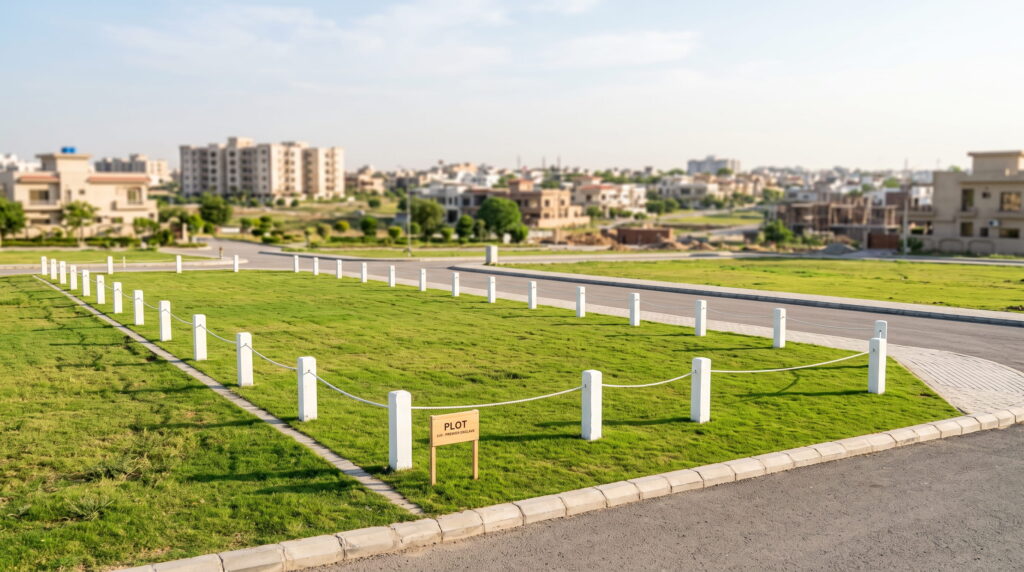
The advertised price on a plot in Pakistan is never the whole story. Between government taxes, allocation and possession charges, location premiums, agent commissions, and the fees that only show up after you’ve moved in, your real cost typically lands 15% to 30% above what first caught your eye.
None of this means you shouldn’t buy. It means you should buy with your eyes open. Ask for a full, written, itemized cost breakdown before you book anything. Verify NOC status yourself instead of trusting a sales pitch. And if you’re financing this on an installment plan, know exactly what a missed payment will cost you before you’re three years into the schedule.
Do that, and the plot you book will actually cost what you planned for, not what you found out about too late.