
Own a plot along Adiala Road, Chakri Road, or the GT Road belt near Rawat? You’ve probably already seen the asking price move on its own; that’s just what happens when a controlled-access road gets built through land once considered “too far out.” The real question isn’t whether the Ring Road affects prices, it’s whether the best of the gain is already gone, and whether your specific plot is genuinely positioned to benefit or just sitting near a map line in a brochure.
The Rawalpindi Ring Road is a 38.3 km, six-lane corridor from Banth to Thalian with five interchanges, close to fully operational as of mid-2026 after years of delays and a project cost that’s climbed from roughly Rs33 billion to over Rs50 billion an escalation that shows this hasn’t been a smooth rollout, and treating it as one uniform price event everywhere along its length is the biggest mistake in how this topic usually gets covered.
1. What Is the Rawalpindi Ring Road? (Quick Context)
The Rawalpindi Ring Road and Its Impact on Property Prices connects five points: Banth on GT Road/N-5, Chak Beli Khan, Adiala Road, Chakri Road, and Thalian on the M-2 Motorway. It’s being executed by the Frontier Works Organization under the supervision of the Rawalpindi Development Authority, with NESPAK handling the design work and the Punjab Planning & Development Wing approving the scope.
A few facts worth anchoring on before anything else:
- Length and design: 38.3 km, six lanes, designed for 120 km/h travel.
- Cost trajectory: the project’s PC-I has been revised more than once from an initial ~Rs33 billion to around Rs40 billion, and then again to roughly Rs50–53 billion, largely due to a redesign at the Thalian interchange and rising construction material costs.
- Timeline slippage: originally targeted for Rawalpindi Ring Road completion date in December 2025, then pushed to March 2026, with full functionality across all Rawalpindi Ring Road interchanges still catching up as of mid-2026.
None of this is a red flag on its own big infrastructure projects in Pakistan routinely see cost and timeline revisions. But if you’re valuing a plot based on “the Ring Road is opening soon,” you should know that “soon” has already moved twice, and the Thalian interchange specifically has been reported as possibly opening separately from the rest of the corridor. That’s a real variable, not a footnote.
2. Why Ring Roads Move Property Prices (The Mechanism)
Here’s the part almost every article on this topic skips: understanding why a road changes land value helps you tell real appreciation from wishful thinking.
A controlled-access corridor expressway only adds value to land that has practical, direct access to it. That means being at or genuinely close to one of the five interchanges not “along the corridor” in a general sense. A plot eight kilometers from the nearest interchange, reachable only by an unpaved secondary road, does not benefit the same way as a plot whose boundary touches the interchange itself, even if both are technically “near the Ring Road.”
There’s also a timing pattern worth knowing. Price appreciation along this corridor didn’t wait for the road to open; it followed the construction announcement and picked up with each completion milestone. This is consistent with how infrastructure pricing usually works: the gap between announcement and opening is where the largest percentage gains tend to happen, because early buyers are pricing in future access before it exists. By the time the road is actually open and cars are driving on it, a lot of that value is already baked into the price. If you’re buying today expecting the same jump early investors got in 2022–2023, you’re arriving late to that particular wave which doesn’t mean there’s no value left, just that it’s a different kind of opportunity now.
The Lahore Ring Road Precedent (What the Data Actually Shows)
The most commonly cited comparison is the Lahore Ring Road, which has a longer operating history and gives a rough benchmark. Properties along that corridor have seen residential prices rise by an average of 20–30% over five years, with interchange-adjacent projects appreciating 40–60% or more depending on development stage.
Here’s a simple way to think about how proximity actually translates into value:
| Proximity to Interchange | Typical Impact Pattern | Who It Suits |
| Directly adjacent boundary touches the interchange | Sharpest, fastest appreciation; strong commercial premium likely | Short-to-mid term investors |
| Within 1–3 km, on a paved access road | Steady appreciation tied to how fast the surrounding corridor develops | Mid-to-long term buyers |
| Within the general corridor but 3+ km away or on a poor access road | Slower, more speculative gains, dependent on future service roads being built | Long-term, higher risk-tolerance investors |
| “Near Ring Road” in marketing material, with no verified interchange link | Unproven often more marketing than geography | Verify before you trust it |
3. Interchange-by-Interchange Breakdown
This is where most coverage gets lazy it lists the five interchanges once and moves straight to “here are five societies that benefit.” In reality, each interchange is its own micro-market, with a different buyer profile and a different value driver.
Banth Interchange (GT Road / Rawat)
This is the eastern entry point, and its impact is mostly commuter-driven. It gives residents currently stuck navigating GT Road congestion a faster, signal-free route toward the motorway and the Chakri/Adiala belt. The area it serves is predominantly agricultural, connecting well over a hundred villages across the Potohar region so the real story here isn’t housing-society plots, it’s agricultural and peri-urban land becoming commercially viable as access improves. If you’re picturing gated residential societies benefiting most from Banth, you’re picturing the wrong asset class. The near-term movers here are more likely to be fuel stations, logistics facilities, and roadside commercial plots that want to sit right at the interchange.
Chak Beli Khan Interchange
This one gets the least coverage anywhere, competitor content included partly because there’s less commercial development around it right now. That’s not necessarily a bad thing if you’re a long-horizon investor comfortable with an early-stage bet, but it does mean the appreciation case here is thinner and more speculative than at Adiala or Chakri. Treat any specific price claims about this interchange with more skepticism than usual, simply because there’s less of a track record to check them against.
Adiala Road Interchange
This is the most heavily marketed interchange, and for good reason it connects directly to GT Road, the M-2 Motorway, and the Islamabad Airport corridor, and several housing societies (RUDN Enclave and DHA River View South among them) market themselves around proximity to it. It’s also, precisely because of that popularity, the interchange where you’re most likely to encounter inflated proximity claims. If a brochure says a society is “at the Adiala Road interchange property,” don’t take that at face value measure it yourself.
A concrete example of why this matters: imagine two housing societies both advertising “Adiala Road Ring Road access.” Society A’s main entrance is roughly 400 meters from the interchange on the completed access road. Society B is 6 kilometers away, connected by a road that’s still partially unpaved, and the marketing material just shows the Ring Road running somewhere near the society on a zoomed-out map. Both will use almost identical language in their ads. Only one of them is actually going to see the sharp, near-term appreciation that “interchange-adjacent appreciation” implies. The only way to tell them apart is to check the actual distance and road condition yourself which is a five-minute exercise on Google Maps that most buyers skip because the brochure looked convincing.
Chakri Road Interchange
Chakri Road connects to societies like Capital Smart City and Blue World City, and it draws a slightly different buyer someone thinking in terms of airport-linked movement and future expansion rather than just daily commuting. This interchange tends to attract investors who are comfortable with a longer runway before the payoff, since a lot of the surrounding development is still in earlier stages compared to Adiala Road.
Thalian Interchange (M-2 Motorway)
Thalian is strategically the most important interchange for motorway and airport access, which is exactly why it’s also the biggest timeline risk. It’s been undergoing a redesign separate from the rest of the corridor, and there have been reports that the Ring Road could become functional before the dedicated Thalian interchange itself is finished. Faisal Town Phase 2 and Capital Smart City Phase 3 both lean heavily on proximity to this interchange in their marketing. If you’re buying here specifically for Ring Road access, build the possibility of a delayed interchange opening into your timeline expectations don’t assume the whole corridor opens as one simultaneous event.
4. What the Data Actually Shows Price Movement Since 2022
Here’s an honest admission that most real estate content in this space won’t make: reliable, longitudinal per-marla price data for these specific corridors is genuinely hard to find in one clean source. Prices are reported inconsistently across portals and agents, and a lot of what circulates is anecdotal “prices doubled” statements with no baseline attached. Rather than repeat a number I can’t verify, here’s what’s worth checking yourself before you rely on any figure:
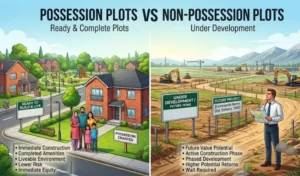
- Compare file price vs possession price. File prices plots sold on paper before physical development are far more speculative and volatile than possessioned plots with actual roads and utilities. A jump in file prices doesn’t always translate into real, sustainable value the way a jump in possessioned-plot prices does.
- Ask when the price moved, not just how much. If a dealer tells you a plot “went up 40%,” ask over what period. Most of the real movement along this corridor happened in step with construction milestones and cost/timeline announcements not gradually and not evenly.
- Cross-check against DC valuation. Government-assessed DC rates move much more slowly than market rates, but a huge gap between the two can tell you how much speculative premium is already baked into the asking price.
If you’re an agent or investor working this market seriously, building your own simple price-tracking table even just recording asking prices for a handful of specific plots on Adiala Road and Chakri Road every few months will put you ahead of almost everyone relying on secondhand percentage claims.
5. The Risks Nobody’s Talking About
Nearly everything written about this topic is bullish, for an obvious reason: most of it is published by, or in partnership with, housing societies trying to sell plots. Here’s what that content leaves out.
- The deadline keeps moving. December 2025 became March 2026, and even by mid-2026 the corridor hasn’t been reported as fully, uniformly operational. A pattern of repeated slippage is relevant information if your Rawalpindi Ring Road investmentthesis depends on a specific opening date.
- Cost escalation signals execution uncertainty. Going from a Rs33 billion PC-I to over Rs50 billion isn’t just inflation it reflects redesign work (particularly at Thalian) and rising material costs. Projects that need multiple cost revisions tend to also see schedule revisions.
- The Thalian interchange may lag the rest of the corridor. If your plot’s value case depends specifically on that interchange, plan for it separately rather than assuming it opens alongside everything else.
- File-based speculative selling is common whenever infrastructure news breaks. Sellers attach future value stories to plots that haven’t seen any physical development yet. The louder the “Ring Road is opening any day now” messaging gets, the more you should slow down and verify rather than speed up and buy.
- Post-opening corrections are real. Once a road is actually operational, a lot of the anticipated value is often already priced in the Lahore precedent supports this. Buying purely on the assumption that “prices will keep climbing after it opens” isn’t guaranteed to play out that way.
A quick buyer checklist before you commit money:
- Confirm the actual interchange distance against RDA’s official master plan not the brochure map.
- Check the society’s NOC verification status directly with RDA, not just through the developer’s sales team.
- Ask specifically whether you’re buying a file or a possessioned plot, and price the difference in risk accordingly.
- Get a clear answer on what physical development exists right now roads, water, electricity versus what’s only on paper.
- Follow RDA/FWO progress updates directly rather than relying solely on developer press releases, which tend to round every update up.
6. Who Should Act Now vs. Wait By Buyer Type

“Buy now” isn’t equally good advice for everyone reading this, so here’s how it breaks down by situation.
If you’re a short-term investor (6 months to 2 years): your best bet is interchange-adjacent, already-possessed plots with active resale demand Adiala Road and Chakri Road interchange property prices frontage rather than file-only options in earlier-stage societies. You have the least room to absorb a delay, so avoid anything where your return depends on a specific opening date you can’t control.
If you’re a mid-to-long-term buyer (3–7 years): you have more room to consider the 1–3 km band around interchanges, where entry prices are still reasonable and you can tolerate a Thalian-style delay without it wrecking your plan. This is also where genuine long-term corridor development not just Ring Road access starts to matter more.
If you’re buying to live there, not to resell: your priorities should shift away from speculative appreciation and toward accessibility, amenities, and community development. And if you’re looking at agricultural or peri-urban land near Banth specifically, understand that you’re in a fundamentally different asset class than housing-society plots the value drivers (commercial viability, road access for logistics) are not the same ones driving residential plot prices elsewhere on the corridor.
7. How to Verify Ring Road Proximity Claims Before You Buy
This takes fifteen minutes and will save you from the single most common mistake buyers make in this market trusting a brochure’s map over the actual ground reality.
- Pull up RDA master plan or the publicly available interchange coordinates.
- Measure the actual distance from the plot’s boundary not the society’s main gate, not the “planned entrance” to the nearest functional interchange.
- Check the condition of the connecting road. A society “5 minutes from the Ring Road” on a completed access road is a very different proposition from one that’s 5 kilometers away and reachable only by an unpaved track.
- Ask for documentary proof of NOC verification status and current development stage get this in writing, not just verbally from a sales agent.
- Treat any phrase like “walking distance to the Ring Road” or “minutes from the interchange” as a claim to verify, not a fact to accept.
Conclusion
The Rawalpindi Ring Road is genuinely one of the most significant infrastructure projects the twin cities have seen in years, and it is moving property prices that part isn’t hype. But it isn’t moving them uniformly, and it isn’t moving them the way most of what you’ll read about it suggests. The real picture is five separate interchange markets, each with its own pace, its own buyer profile, and its own risk level, sitting inside a project that has already slipped its deadline twice and revised its budget upward more than once.
If you take one thing away from this, let it be this: distance and access have to be verified, not assumed. A plot “near the Ring Road” and a plot “at the Ring Road” can be separated by a six-figure difference in eventual value, and the only way to know which one you’re looking at is to check it yourself against the official master plan rather than the brochure. Whether you’re a short-term investor chasing the next wave, a long-term buyer willing to ride out a delay or two, or someone simply looking for a place to live with better connectivity, the corridor still has real opportunity in it it just rewards the buyer who checks the map over the one who trusts the ad.
Frequently Asked Questions
Is the Rawalpindi Ring Road complete in 2026?
As of mid-2026, the corridor is close to fully operational, though the Thalian interchange has faced separate redesign work and may lag behind the rest of the route. Confirm the latest status directly through RDA or FWO updates before making a decision based on completion timing.
Which interchange has the biggest impact on property prices?
Adiala Road interchange currently has the most housing-society development and marketing built around it, but Thalian is arguably the most strategically important long-term because of its motorway and airport link assuming its redesign doesn’t create lasting delays.
How much will property prices rise after the Ring Road opens?
There’s no reliable single number, and be wary of anyone who gives you one with confidence. The Lahore Ring Road precedent suggests a broad range of 20–30% corridor-wide over several years, with interchange-adjacent projects potentially seeing more but market bases, buyer demand, and execution differ enough between cities that this should be treated as a rough reference, not a forecast.
Is it too late to invest in Ring Road-adjacent property?
Not too late, but the nature of the opportunity has changed. Early buyers captured most of the announcement-to-completion speculative gain. What’s left now is more tied to actual corridor development, commercial buildout, and verified access which rewards careful due diligence over speed.
What’s the difference between file price and possession price near the Ring Road?
A file is a paper claim to a future plot before physical development is complete; its price is more speculative and can move sharply on rumor alone. A possessed plot has actual roads, utilities, and a physical location; you can verify its price tends to be a more reliable reflection of real, sustainable value.
Which housing societies have verified (not just claimed) Ring Road access?
This varies by interchange and changes as development continues, so don’t rely on any single article for a permanent answer. Verify current proximity and NOC status for any specific society directly against RDA’s master plan before trusting a developer’s claim.