
Building in Saffron City for most Pakistanis, owning a home is not just a financial goal, it is a lifelong dream. And while buying a plot is the first step, building your own home on that plot is where the dream truly comes to life. Saffron City Islamabad offers more than just a piece of land. It offers a complete, master-planned community where you can build a home tailored to your needs, in a legally secure, fully approved, and strategically located development on GT Road in the Twin Cities.
Why Build in Saffron City?
Before we dive into the steps, it is worth understanding why Saffron City is one of the best places in the Twin Cities to build your home.
Legally Secure Investment – Saffron City holds full approval from the Rawalpindi Development Authority (RDA), along with a valid NOC and Letter of Permission (LOP). Every plot you build on is legally protected.
Prime GT Road Location – Situated on one of Pakistan’s most important arterial roads, Saffron City offers unmatched connectivity to both Islamabad and Rawalpindi, making daily commuting effortless.
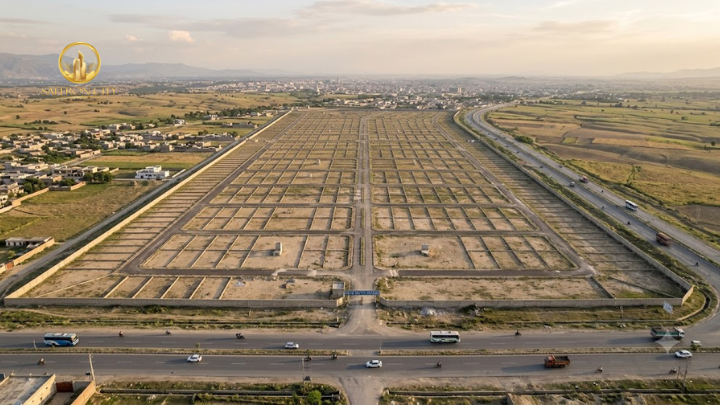
World-Class Infrastructure – Wide carpeted roads, underground utilities, landscaped green belts, mosques, parks, commercial areas, and a grand entrance are all part of the master plan.
Trusted Developer – The SKB Group brings over 25 years of construction and development experience from Pakistan, Dubai, Abu Dhabi, and Saudi Arabia. Their global standards are reflected in every aspect of Saffron City’s development.
Rising Property Value – The Islamabad-Rawalpindi corridor is one of the fastest-appreciating real estate markets in Pakistan. Building now means your completed home will be worth significantly more in the coming years.
Step 1: Get Your Plot Allotment Letter
Your journey to building begins with your Saffron City Plot Allotment Letter, the official document from Saffron City confirming that a specific plot has been allocated to you.
What Is an Allotment Letter?
An allotment letter is a formal written document issued by the developer that confirms your ownership or booking of a particular plot. It includes your name, plot number, block, size, and the terms of your purchase.
How to Obtain It
Once you have completed your booking and made the required down payment, the Saffron City office will issue your allotment letter. If you purchased through an authorized dealer, ensure the letter is issued directly from the Saffron City development office.
Documents Typically Required
- Original booking receipt
- Copy of CNIC (or passport for overseas Pakistanis)
- Proof of installment payments made
Verify Your Plot on Ground
Once you have the allotment letter, visit the site with a representative from Saffron City to physically identify and confirm the dimensions and boundaries of your plot. This is an important step before any construction begins.
Step 2: Clear All Dues and Get Possession
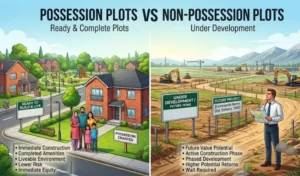
Before you can begin construction, you must obtain your Possession Letter and for that, all outstanding dues must be cleared.
Clear Your Installments
If you purchased your plot on an installment plan, ensure that all payments are up to date. Most developers, including Saffron City, require full or near-full payment before granting official possession.
What Is a Possession Letter?
A possession letter is the official document that hands over physical control of the plot to you. It is your green light to begin construction.
Physical Site Visit and Demarcation
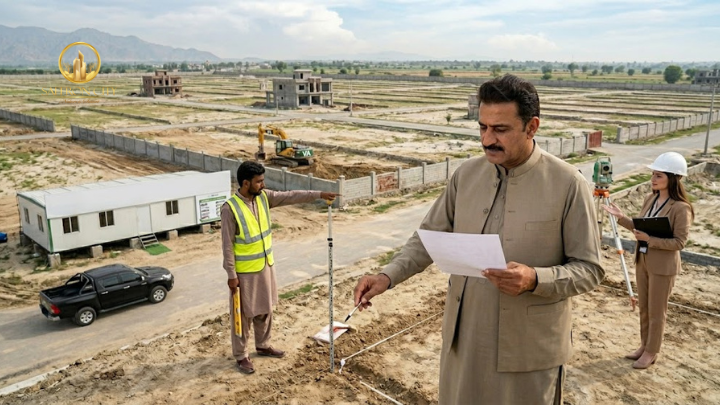
After receiving your possession letter, attend a demarcation ceremony where Saffron City’s technical team will physically mark the corners of your plot with pegs or pillars. This ensures there is no confusion about plot boundaries before construction begins.
Keep All Documents Safe
From this point forward, your allotment letter, possession letter, and payment receipts are critical legal documents. Store both physical and digital copies in a safe place.
Step 3: Hire a Qualified Architect
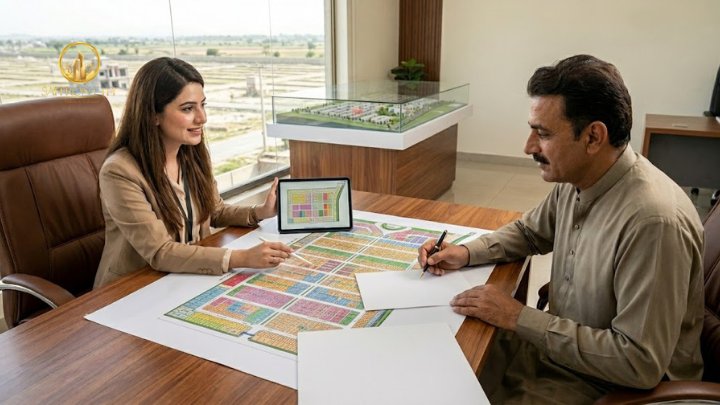
With possession in hand, the next step is designing your home and for that, you need a qualified architect.
Why You Need a Professional Architect
An architect does far more than draw a floor plan. They design a home that maximizes your plot’s space, meets local building codes, accommodates your family’s lifestyle, and ensures structural safety. Skipping this step or hiring an unqualified draftsman often leads to costly mistakes later.
How to Choose the Right Architect
- Ask for a portfolio of completed residential projects
- Check if they have experience working in RDA-regulated societies
- Get references from past clients
- Discuss your budget and timeline upfront
What the Architect Will Design
- Floor plans for each level
- Elevation drawings (exterior appearance)
- Structural drawings
- Electrical and plumbing layouts
- 3D visualization of the finished home
Get Design Approved by Saffron City
Before finalizing your design, submit it to Saffron City’s development office for review. Every housing society has building bylaws including rules on setbacks, maximum height, and coverage ratio and your design must comply with these regulations.
Step 4: Get Your Building Plan Approved
Once your architect has finalized the design and it aligns with Saffron City Building Bylaws, you need to get the building plan officially approved.
Submitting for Approval
Submit your building plans to Saffron City’s development authority or the relevant RDA office, depending on the specific requirements of your block.
Documents Typically Required
- Approved plot allotment letter
- Possession letter
- Architect-stamped building drawings
- Copy of owner’s CNIC
- Affidavit of construction compliance
Timeline for Approval
Approval timelines vary but typically range from two to four weeks. Your architect can help expedite this process by ensuring all drawings are complete and compliant from the start.
Common Mistakes to Avoid
- Submitting incomplete drawing sets
- Ignoring setback requirements (the minimum distance between your structure and plot boundaries)
- Exceeding the permissible coverage ratio
- Starting construction before receiving written approval
Approval is not just a formality it protects you legally and ensures your home can be officially registered in the future.
Step 5: Hire a Reliable Construction Contractor
With your approved building plan in hand, it is time to bring your design to life. The key to a smooth construction experience is hiring the right contractor.
How to Find and Vet a Contractor
- Ask for recommendations from neighbors or friends who have recently built
- Look for contractors with experience in residential construction in Islamabad or Rawalpindi
- Check completed projects and speak to their previous clients
- Verify that they can provide a team of skilled labor and manage subcontractors
Get Multiple Quotes
Always get at least three quotes from different contractors before making a decision. Compare not just the price but also the scope of work, materials included, and timeline.
Sign a Proper Contract
A written contract is non-negotiable. It should clearly state:
- Total cost and payment schedule
- Materials to be used and their specifications
- Construction timeline with milestone dates
- Penalty clauses for delays
- Warranty on workmanship
Set a Realistic Timeline
A typical residential construction in Pakistan takes between 12 to 24 months depending on the size of the house, quality of materials, and pace of construction. Discuss a realistic timeline with your contractor and build in a buffer for weather delays or material shortages.
Step 6: Construction Phase Begins
This is where your dream starts taking physical shape. The construction phase typically moves through the following stages:
Foundation and Structure Work
The foundation is the most critical part of your home. Your contractor will excavate the ground, lay the foundation according to your structural drawings, and begin the column and beam framework. Do not rush this stage; a strong foundation determines the safety of everything built above it.
Grey Structure Completion
The grey structure includes all the brickwork, concrete columns, beams, slabs, and roof. Once the grey structure is complete, your home’s layout and dimensions are fully visible on ground.
Plumbing, Electrical, and Gas Rough-In
Before plastering begins, all plumbing pipes, electrical conduits, and gas lines are installed inside the walls. This is called the rough-in stage, and it must be done carefully because these systems become inaccessible once the walls are plastered.
Plastering and Finishing Work
After rough-in, walls are plastered and leveled. This is followed by flooring (tiles or marble), wall finishes, bathroom fittings, kitchen cabinets, doors, windows, and paint.
Roof and Exterior Work
The roof is waterproofed and finished. Exterior walls are plastered, painted, or clad according to your design. Boundary walls, the driveway, and any outdoor areas are completed in this final stage.
Step 7: Get Utility Connections
Once the construction is largely complete, the next priority is securing utility connections for your home.
Electricity Connection
Apply to the relevant electricity provider IESCO (Islamabad Electric Supply Company) for Islamabad areas or PESCO for Khyber Pakhtunkhwa areas. Saffron City’s location on GT Road places it within the accessible range of these providers.
Gas Connection
Apply to SNGPL (Sui Northern Gas Pipelines Limited) for a domestic gas connection. Ensure your plumber has installed the internal gas piping to code.
Water Supply
Saffron City Master Plan includes a dedicated water supply network. Contact the development office to apply for your water connection once construction is nearing completion.
Internet and Cable
Multiple internet service providers (ISPs) operate in the GT Road corridor. Arrange for a fiber or cable connection well in advance of your move-in date.
How Saffron City Facilitates Connections
Saffron City’s development team assists residents in coordinating utility connections as part of their commitment to a fully functional community. Contact the office for guidance specific to your block and phase.
Step 8: Final Inspection and Completion Certificate
Before you move in, it is important to conduct a thorough final inspection and obtain your completion certificate.
Building Inspection
Walk through every room of your home with your contractor and architect. Check for:
- Cracks in walls or ceilings
- Uneven flooring
- Faulty electrical points or switches
- Plumbing leaks
- Doors and windows that do not open or close properly
- Poor paint finish or incomplete tiling
Document all issues and ensure your contractor addresses them before final payment is released.
Completion Certificate
Apply for a completion certificate from the relevant authority confirming that your building was constructed in accordance with the approved plan. This document is essential for:
- Legally registering your property
- Getting a utility connection in your name
- Future sale or transfer of the property
Final Walk-Through Checklist
- All rooms clean and free of construction debris
- All fixtures installed and functioning
- Utility connections active and tested
- Boundary wall and gate complete
- External areas clean and accessible
Tips for a Smooth Construction Experience
Building a home is a major undertaking. Here are some practical tips to make the process as smooth as possible:
Set a realistic Budget with a Contingency Always add 15 to 20 percent on top of your estimated construction cost for unexpected expenses. Material prices fluctuate and unforeseen structural issues can arise.
Visit the Site Regularly Do not rely entirely on your contractor’s updates. Visit the site at least once or twice a week to monitor progress, quality of materials, and workmanship.
Keep All Documents and Receipts Safe From material invoices to contractor payments, maintain a complete paper trail. This protects you legally and helps with budgeting.
Do Not Compromise on Material Quality It is tempting to cut costs on materials, but quality issues in the structure, plumbing, or electrical work can cost far more to fix later. Invest in quality where it matters most.
Working with Saffron City’s Team The Saffron City development office is a valuable resource. For questions about bylaws, utility connections, or construction guidelines, reach out to their team directly..
Conclusion
Building your own home is one of the most rewarding experiences life has to offer but it requires careful planning, the right team, and a community you can trust.
Saffron City Islamabad provides all three. With its RDA-approved legal status, prime GT Road location, world-class infrastructure, and the backing of the SKB Group’s 25-plus years of expertise, Saffron City is more than a housing society; it is a place where dreams are built, literally.
Follow the steps in this guide, work with qualified professionals, and lean on Saffron City’s development team whenever you need support. Your dream home is not just possible it is waiting for you.
Frequently Asked Questions
How long does construction take in Saffron City?
A typical residential home takes between 12 to 24 months depending on the size of the house and pace of construction. With proper planning and a reliable contractor, timelines can be managed effectively.
Can I start construction before completing full payment?
Generally, possession which is required before construction is granted after dues are cleared. Contact Saffron City’s office to understand the specific requirements for your plot.
Does Saffron City have construction restrictions?
Yes. Like all RDA-regulated societies, Saffron City has building bylaws covering setbacks, maximum height, coverage ratio, and design guidelines. Your architect should review these before finalizing your plan.