

If you’ve searched for this, chances are you’re already close to doing it. Maybe you just bought a plot file from someone and need it in your name. Maybe you’re an agent handling the paperwork for a client. Or maybe you’re an investor who’s about to flip a file for the third time this year. Either way, you’ve probably noticed something: most of what comes up online is either about transferring a burial plot (not what you meant) or American property deed law (also not what you meant).
So let’s actually talk about how this works in Pakistan what a plot file transfer really is, what it costs, what documents you’ll need, and the mistakes that trip up almost everyone the first time they do this.
1. What Does “Transferring a Plot File” Actually Mean?
A plot file is the document a housing society how to transfer plot file to another name department or developer issues when you book a plot it’s your proof that you own (or are paying installments toward) a specific plot number in that scheme. It’s not the same as a government land title. Until the society hands over possession and the plot goes through registry and mutation (intiqal) at the land revenue office, the file is really just the developer’s internal record of who owns what.
That distinction matters more than most people realize. A lot of buyers assume that once a file is in their name, they legally own the land the way they’d own a house they bought outright. They don’t not yet. What they own is the right to that plot within the developer’s system, along with whatever installment plan transfer obligations come with it. Full legal ownership only happens later, at registry stage.
This is exactly why file transfers happen so often before possession. Plots in installment-based societies get bought and sold multiple times while they’re still “on paper,” long before anyone’s standing on the actual land. Each time that happens, the file has to be formally transferred through the developer it’s not something you can just do with a handshake and a WhatsApp message, even though that’s often how the deal itself gets negotiated.
File Transfer vs. Registry Transfer (Quick Comparison)
Here’s the difference laid out plainly, because this one table will save you more confusion than anything else in this article:
| Aspect | File Transfer | Registry/Mutation Transfer |
|---|---|---|
| What it transfers | The developer’s internal allotment record | Legal land title in government records |
| Issued by | The housing society or developer | Land revenue authority (patwari/registrar office) |
| When it applies | Before possession, during the installment stage | After possession, once ownership is finalized |
| Documents needed | Allotment letter, NOC, NDC | Registry deed, mutation (intiqal), stamp duty payment |
| Typical cost | A society transfer fee (flat rate or percentage) | Government stamp duty + registration fee |
If you only remember one thing from this section, remember this: a file transfer changes whose name is on the developer’s books. A registry transfer changes whose name is on the government’s books. You need the first one now. You’ll need the second one later, at possession.
2. Who Needs This Process and Why It Looks a Bit Different for Each Person
- Buyers care about one thing above all: making sure the file is genuine and that no installments are pending before they agree to take it over. Inheriting someone else’s unpaid dues is the single most common regret buyers report after a rushed transfer.
- Sellers need a No Dues Certificate (NDC) from the society before they can even start the transfer without it, the developer won’t process anything.
- Real estate agents usually sit in the middle, collecting documents from both sides and liaising with the society’s transfer department. Good agents also double-check that the society itself has valid NOC for plot transfer status, not just that the individual file looks clean.
- Investors who buy and sell files repeatedly before possession run into a slightly different issue: some developers increase the plot transfer fee after a certain number of transfers on the same file, specifically to discourage rapid flipping. If you’re trading files as an investment strategy, this is worth checking before you commit to a deal.
Documents Required for Plot File Transfer
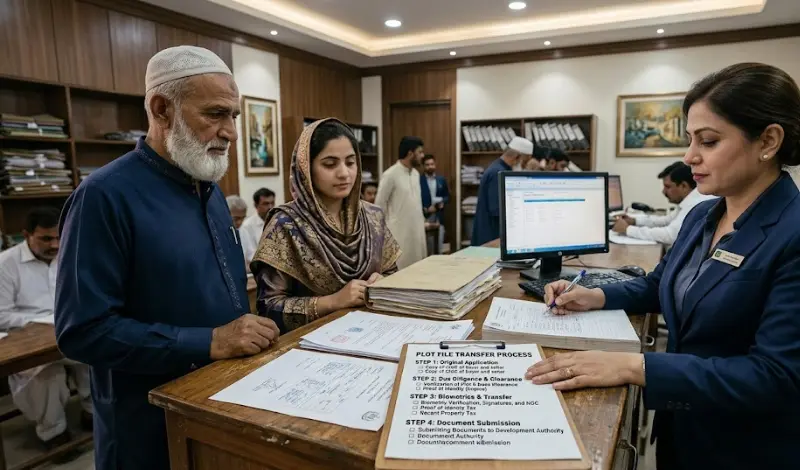
Keep this list handy most delays happen because someone shows up to the society office missing one item from it.
- Original allotment/booking letter
- CNIC copies of both the buyer and the seller
- CNIC copy of next of kin (nominee) for both parties
- Passport-size photographs of buyer and seller
- No Dues Certificate (NDC) from the developer
- No Objection Certificate (NOC) for transfer, where the society requires one
- Paid installment plan transfer receipts or a full ledger statement
- NICOP copies, if either party is an overseas Pakistani
- Power of attorney documents, if the transfer is being handled by an attorney on someone’s behalf
Special Case: Transferring on Behalf of an Overseas Pakistani
Say a father living in Dubai wants to transfer a plot file authenticity verification to his son in Islamabad. He can’t fly back just to sign paperwork every time a housing society needs a signature. This is where power of attorney for property transfer comes in it has to be executed and attested through the Pakistani embassy or consulate in the country he’s living in, then sent back home for the transfer application.
This is also where NICOP becomes essential alongside CNIC, since it’s the document that verifies overseas Pakistani plot transfer status to the society. The most common holdup in these cases isn’t the transfer itself it’s the embassy attestation step, which can add one to two weeks if it isn’t started early. If you’re an agent working with an overseas client, get the power of attorney for property transfer process moving before you finalize anything else; it’s almost always the longest pole in the tent.
3. Step-by-Step Plot File Transfer Process
- Confirm the dues status. Before anything else, get a ledger statement from the developer showing exactly how much has been paid and what’s outstanding. This protects both sides from surprises.
- Apply for the NDC. The seller requests a No Dues Certificate from the society, confirming there’s nothing pending against the file.
- Fill out the transfer application form. Both buyer and seller sign it this is usually a standard form provided by the developer’s transfer or customer services department.
- Submit all documents together. Everything from the checklist above goes in as one package, not piecemeal incomplete submissions are the #1 reason transfers get delayed.
- Pay the transfer fee. Societies typically require this via bank transfer, pay order, or an online payment portal check the developer’s accepted method before you go in.
- Wait for developer verification. The society checks the documents, confirms dues are clear, and verifies the file hasn’t been flagged or duplicated.
- Receive the new allotment or transfer letter. This is the official document confirming the plot is now in the new owner’s name.
- Update the installment schedule, if the plot is still being paid off. The new owner takes over the remaining payment plan from that point forward.
How Long Does the Transfer Process Take?
In most cases, expect 7 to 21 working days, depending on how quickly the developer’s internal team processes it. Pending dues, missing documents, or overseas attestation requirements are what push things toward the longer end. If everything’s in order and submitted together, some societies can turn it around in under two weeks.
4. Plot File Transfer Fee What to Expect
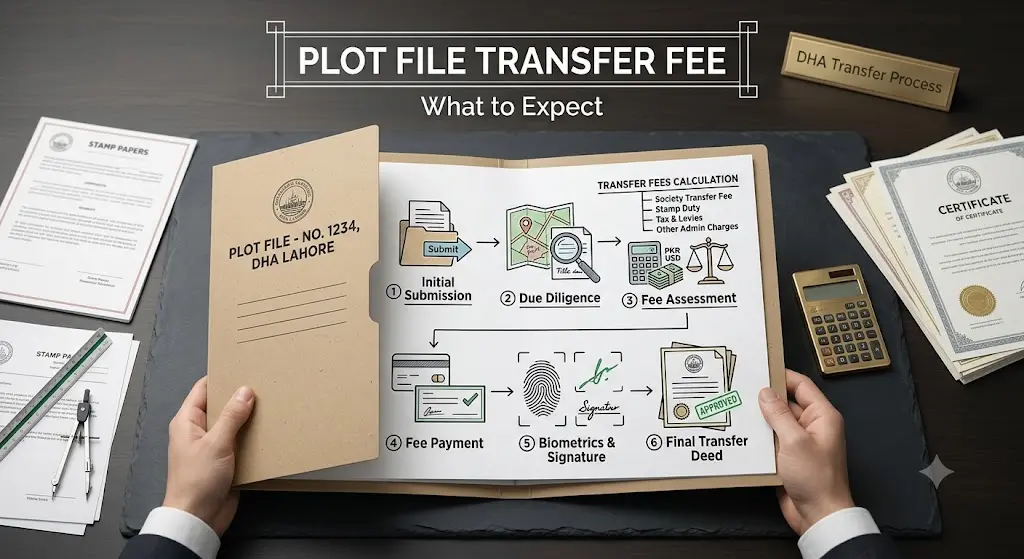
Unlike stamp duty, which is set by the government and applies at the registry stage, the transfer fee for a plot file authenticity verificationis set by the individual developer or society. It’s usually either a flat amount or a percentage of the plot’s value, and it varies significantly from one housing scheme to another there’s no single national rate you can rely on.
One thing worth knowing before you negotiate a deal: some developers charge a higher fee if a file has already been transferred several times. It’s a deliberate friction point, meant to discourage the file from changing hands too many times before possession. If you’re an investor planning to move a file quickly, ask the developer’s transfer department about this upfront it can change the math on a deal that otherwise looks profitable.
Factors That Affect Transfer Cost
- Plot size and category (residential plots and commercial plots are usually priced differently)
- How many times the file has already been transferred
- The specific society’s fee schedule this is set independently by each developer
- Whether you’re requesting an expedited or rushed transfer
5. Common Mistakes to Avoid When Transferring a Plot File
- Skipping the dues check. Buying a file without confirming the ledger is clean means you could be inheriting someone else’s unpaid installments.
- Relying on a verbal agreement. A WhatsApp confirmation or a handshake at the society office doesn’t hold up the formal transfer application is what actually protects both parties.
- Not verifying the file directly with the developer. Always confirm authenticity with the society itself rather than trusting the paperwork the seller hands you.
- Confusing file transfer with legal ownership. As covered above, a transferred file is not the same as a registered title don’t treat it as the final step.
- Overseas buyers starting power of attorney too late. This is consistently the biggest cause of delay in cross-border transfers.
- Agents skipping the society’s own NOC verification. A clean individual file doesn’t mean much if the society itself isn’t properly approved check both.
Conclusion
A plot file transfer isn’t complicated once you know the sequence confirm dues, get the NDC, submit the paperwork together, pay the fee, and wait for the new allotment letter. Where people actually get into trouble is skipping steps: buying a file without checking its dues, trusting a verbal deal, or assuming the file itself equals legal ownership. Whether you’re a first-time buyer, an agent managing the process for a client, or an investor moving files quickly, the same rule protects you every time verify before you transfer, not after.